Here is what we are trying to hold.
The rest, we learn as we walk.
INFUSE is a small house. A few humans, a workshop, boxes that leave, plants that arrive. It isn't a mission — it's a devotion. The word is right: we love these plants, and we try to serve them well.
That's where we speak from. Not from a finished knowing. Not from authority. From the bare, whole place of a work in progress.
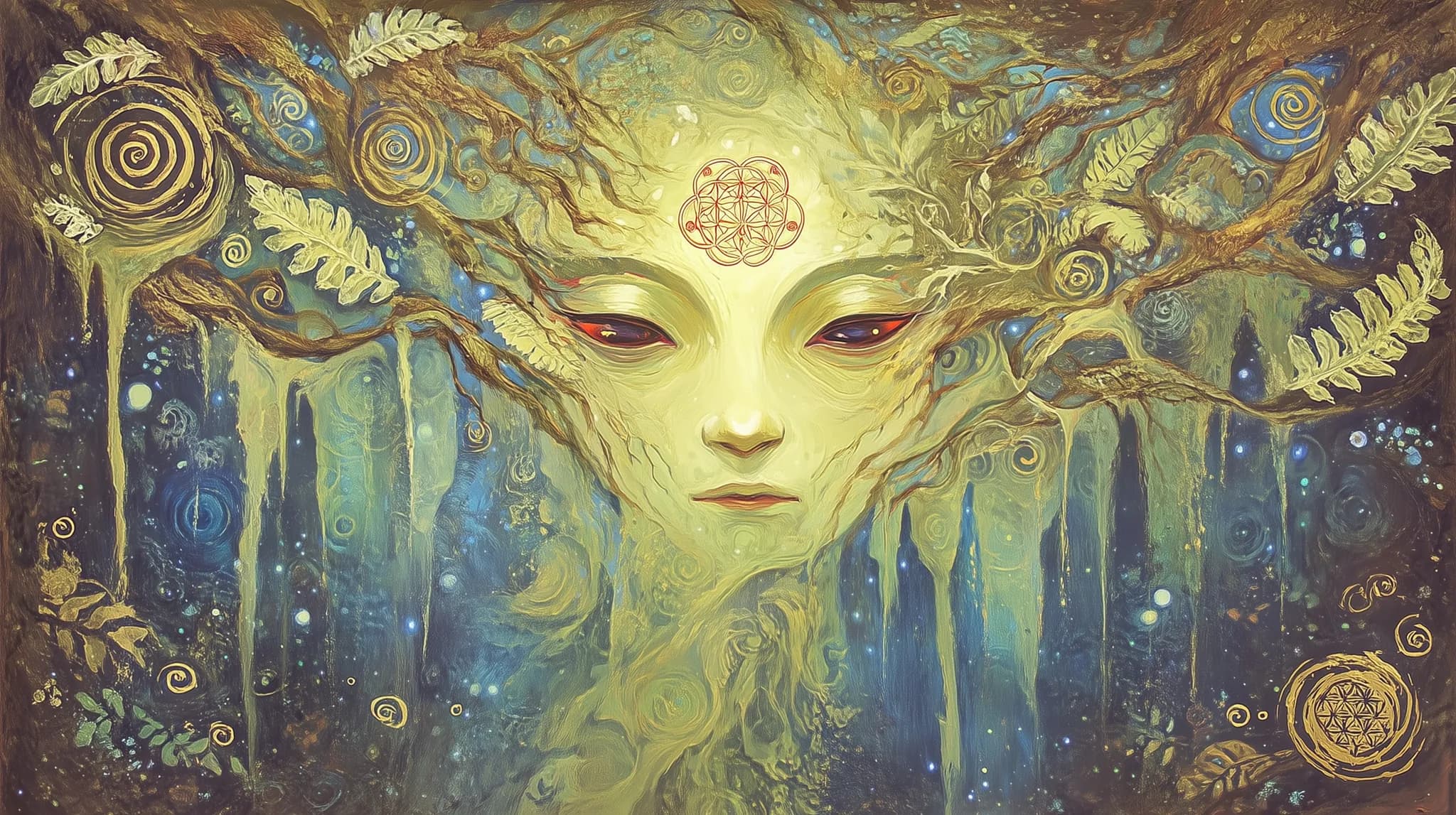
They are beings.
Not ingredients. Not actives. Not objects you file in drawers. Beings. Each with its season, its place, its character. A Cacao is not a Lotus is not a Bobinsana. Each has its way of speaking — and of going quiet.
Sophie Strand writes that the body is a doorway, not a scoreboard. We say the same of plants. They do not fix. They open. They keep company. They slow the edges of breath. Sometimes they ask a question no one else thought to ask.
Daniel Odier, who spent his life beside a yogini of Kashmir, says the body is the universe. That's large. It's true. A plant, taken with care, reminds us. Drinking a tea is not consuming — it's letting a neighbour come in.
We walk behind, not in front.
Every plant we offer was taught to us by someone. A lineage. A gatherer. A people. A book. A friendship. Each time we try to name where it comes from — and through whose hands it has passed.
Ubulawu comes to us through Xhosa and Zulu traditions, who open the dream. Bobinsana reaches us through the Shipibo, who sing their icaros to the plants. Cacao comes from the Maya and the Mexica, through farmers who are alive today. Blue Lotus comes to us from a long tradition born in ancient Egypt, and today from Sri Lanka. We name them. We try to pay fairly. We say what we know — and what we do not.
Bayo Akomolafe speaks of a return that is never a return to the same. The fracture we've left in the ground keeps its shape. To repair is to come back otherwise. INFUSE did not invent our relationship to plants. We have inherited it badly, partly, through layers of modernity, colonisation, and forgetting. We know that. That's what we work with.
What we refuse to say.
We do not promise care. We do not promise healing. We do not say a plant does this or that for certain. We are not doctors, not shamans, not gurus. We accompany — and what matters most will always be what happens between you and the plant, not between you and us.
We refuse the before/after grammar. The perfect bodies, the photogenic serenity, the seven-day transformation. Life is slower, rougher, more beautiful than that. Strand says it with the precision of a chronically ill writer: there is no better version of yourself to reach. There is this life, porous and tender, to inhabit.
We also refuse the spiritual costume. Words borrowed from other peoples spoken as if we carried them. You can cite a tradition. You cannot own it.
We don't sell a product. We offer a meeting.
There is an old griot tale that Henri Gougaud tells. A man goes each morning to place a basket of millet at the foot of a baobab, because a djinn lives there. He offers, before receiving. That is the posture we'd like to learn to hold with the plants. Not the posture of a customer. The posture of a neighbour.
When you order a sachet here, we hope it does not just end up in a cup. We hope it becomes a small rite. A minute of silence before the hot water. A question asked softly. A name spoken. Not because you must ritualise. Because it's truer.
We often say: the dream has many languages, the body has even more. We don't ask you to speak them all. We hand you a door.
What we hold today. What we hope, tomorrow.
Today, we choose each plant with attention. We say where it comes from. We pay as fairly as we can. We write long, true, fact-checked plant entries. We answer messages, one by one. We hold a small community of allies who share INFUSE and receive a Sap (a Sève) in return. That is what we are — in the present, verifiable.
Tomorrow — and it is a tomorrow we have to earn, not a promise — we hope to go further: to give voice to the keepers of the plants we come to know, to redistribute a share of what we earn back to the lands that carry them, and to learn, slowly, to step out of the marketplace frame without pretending it doesn't hold us. We are not there. We're walking in that direction.
We do not claim to be clean. We ship in boxes. We invoice in euros. Our ethics are in progress, not accomplished. If we tried to get everything right, we'd do nothing. So we hold the imperfection — and we say it.
Come in, if it calls you.
We have no answer to the great question. We have a shop, a workshop, some fifty chosen plants, a body of writing, and a sincere attention for what works in the night, in the dream, in the slow warmth of the body. It's little. It's enough to begin.
If a plant calls you here, ask it what it wants. Not what you expect from it. What it wants.
And come back to tell us what it said.
— The house of INFUSE
Last updated: 2026-05-31